The real cost of studio photography versus AI product imagery
The economics have shifted further than most catalogue teams realise.
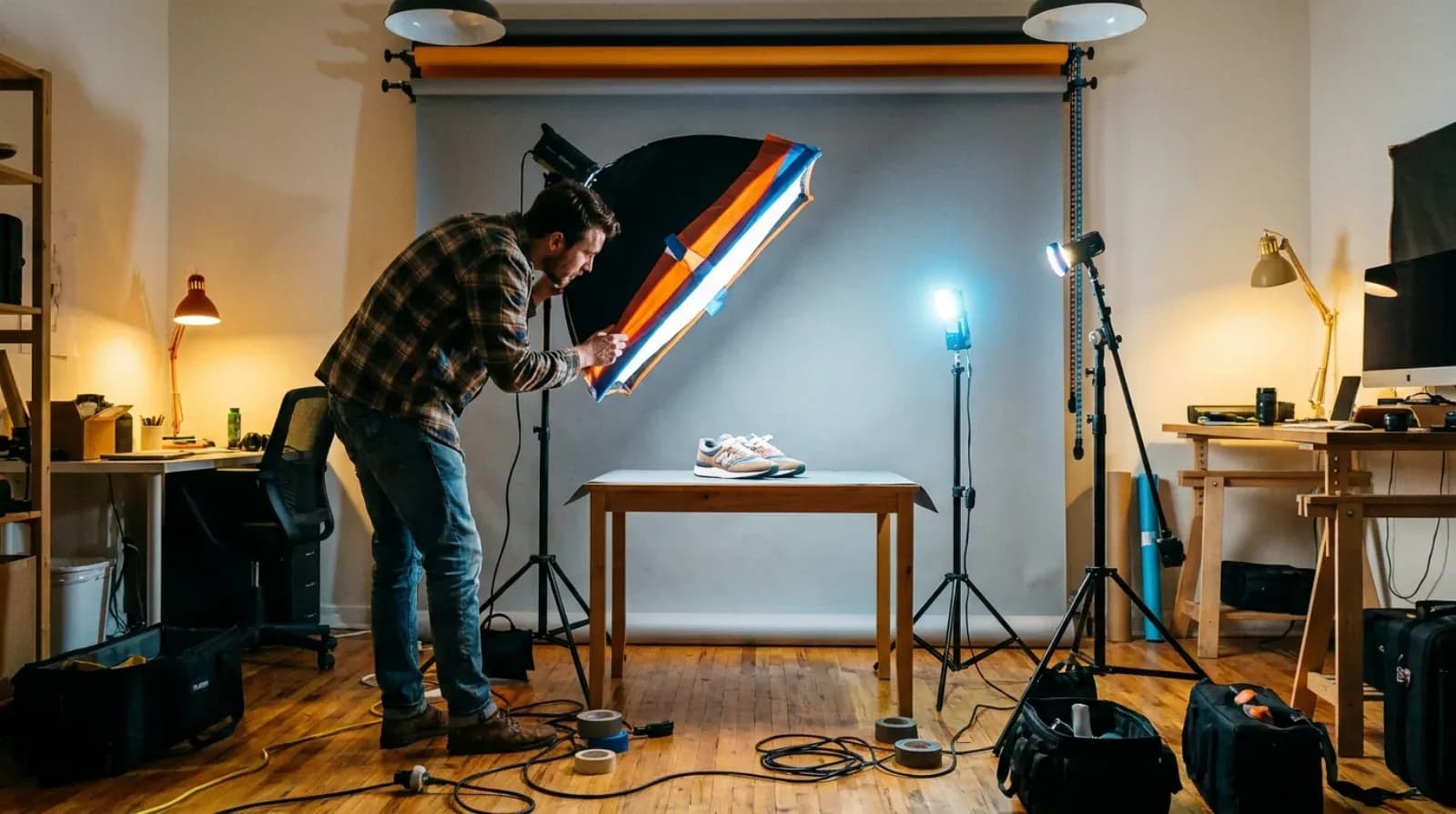
Photography has always been a tax on a growing catalogue
Every new product traditionally meant booking a studio, a photographer, a stylist and often a model, before a single listing could go live. For a catalogue that adds a handful of products a year that tax is manageable. For one that adds dozens a week, it becomes the actual bottleneck on how fast a business can grow online, regardless of how good the storefront underneath it is.
What the numbers actually look like
Industry reporting now puts traditional product photography at somewhere between eighty and two hundred and fifty dollars per product, against a few dollars per image for an AI powered workflow, and most brands making the switch report production costs falling by half or more. Some of the largest fashion retailers have moved further and faster than most would expect, SHEIN reportedly generates model imagery for more than ten thousand new products a day without booking a single human model, and Inditex, the parent company of Zara, has committed hundreds of millions of dollars to AI photography infrastructure across its brands.
ASOS has separately reported a very large lift in product page conversion after introducing AI generated model imagery, attributing a meaningful share of additional annual revenue directly to it. Numbers at that scale should be read as directional rather than universal, but the direction itself is not in question.
Where the tradeoff actually lies
The saving is only real if the output stays consistent and genuinely on brand. A catalogue that ships fast but looks inconsistent from one product to the next erodes trust faster than a slower, more careful one ever would. The workflow has to be built with the same editorial care as the photography it replaces, not treated as a shortcut around it.
There is also a quieter cost worth naming honestly, a fully generated catalogue can start to feel uncanny if nobody is checking for it, slightly wrong hands, slightly wrong proportions, a texture that does not quite hold up on close inspection. The brands getting this right treat the AI workflow as a production pipeline with a human editor at the end of it, not a fully unattended system.
What we have learned building this for Surana Jewellers
Surana’s catalogue turns over constantly and every piece is genuinely one of a kind, exactly the conditions where traditional photography breaks down fastest and where consistency is hardest to fake. The AI image workflow we built keeps every piece looking like it belongs in the same catalogue while letting new stock reach the store in days rather than the weeks a full photo shoot would have taken.