What we learned giving a 1735 jewellery house a modern storefront
A reflection on bringing three centuries of jewellery craft onto a modern commerce platform.
Heritage and speed do not usually sit in the same sentence
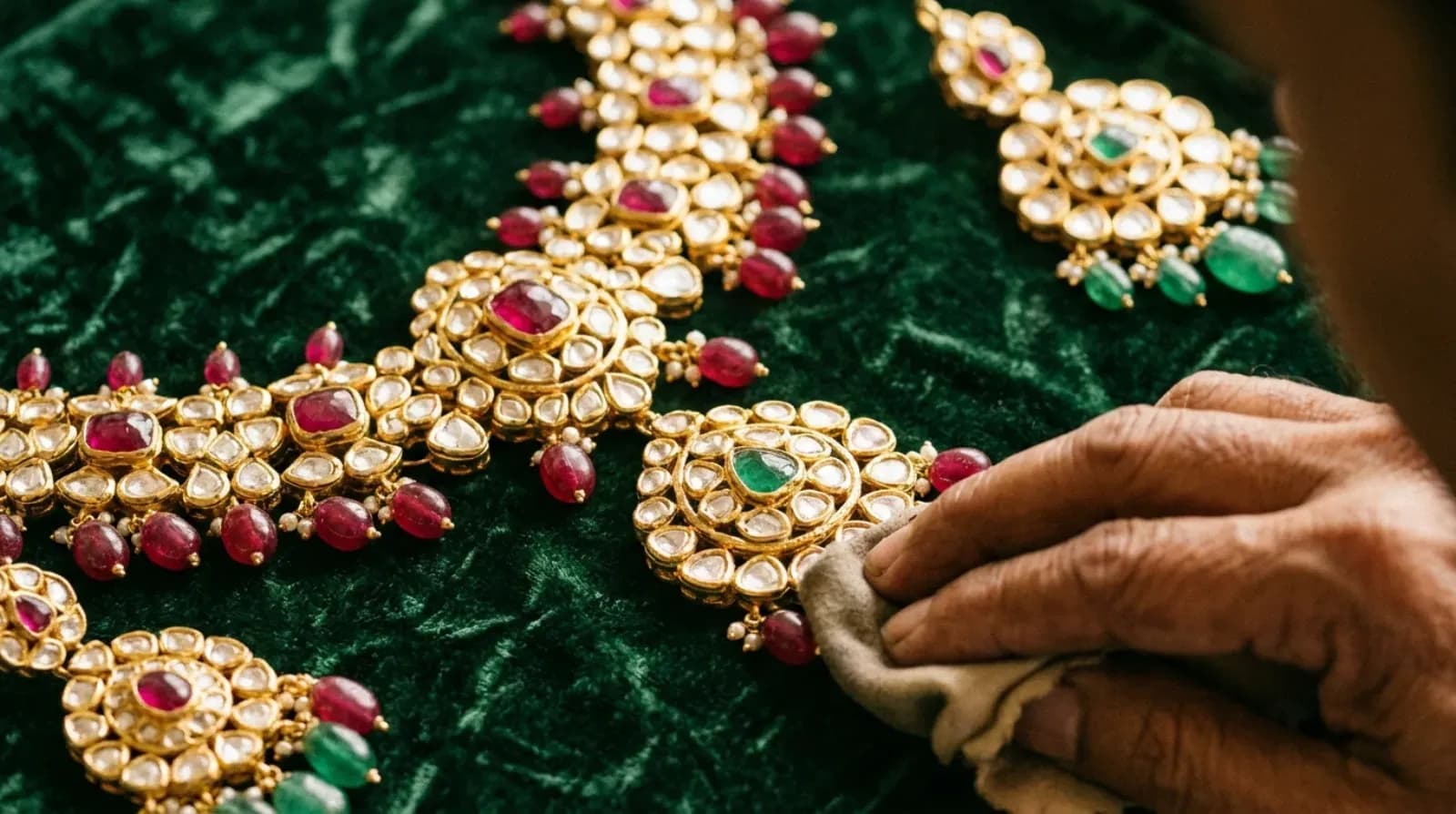
Surana has perfected kundan and polki jewellery in Jaipur since 1735, three centuries of craft that does not hurry for anyone. Selling that heritage online meant respecting work that can take weeks to complete, on a platform built for a market that expects new arrivals daily and a checkout that feels instant. Those two expectations are not naturally compatible, and most attempts to reconcile them end up compromising one to protect the other.
The real bottleneck was never the platform
Salesforce Commerce Cloud handled the scale and the catalogue complexity easily, a large, fast moving luxury catalogue is exactly the problem it is built for. The actual constraint was photography. Every piece Surana sells is genuinely one of a kind, which means there is no shortcut of photographing one sample and reusing the image, and photographing each individual piece properly by hand, the way its craftsmanship deserves, was slow and expensive in a way that quietly capped how fast new collections could reach the store.
This is the detail that is easy to miss from the outside. A commerce platform can be technically flawless and a business can still be bottlenecked entirely by something that looks, at first glance, like a separate department’s problem.
What we built
Alongside the jadau.com storefront, we built an AI product image workflow, powered by Google Gemini, that turns raw shots of each piece into clean, consistent, on brand imagery automatically, removing the wait between a piece being finished and it being ready to sell. We paired that with a voice chatbot that gives an online visitor the same guidance they would get from a jeweller on the shop floor, someone who can explain what kundan work actually is rather than leaving a customer to guess from a product photo alone.
Building the storefront and the AI layer together, rather than treating the second as an upgrade to be added later, meant neither piece had to compromise for the other. The imagery workflow was designed around what the storefront actually needed to display, not retrofitted to match it after the fact.
What we would tell any heritage brand starting this
Do not assume the commerce platform is where the hard problem lives. For a business built on craft rather than volume, the imagery and the guidance around each piece usually matter more to a customer’s decision than the checkout flow ever will, and that is where we would recommend spending the first and hardest engineering effort.